Services / Walkways
Concrete Walkway Installation
Front paths, side-yard runs, sidewalks and garden connectors for homes and businesses throughout the valley. Formed to follow your grade so water runs away from the building instead of pooling at the door.
+1 (530) 218-6221Call For Free Estimate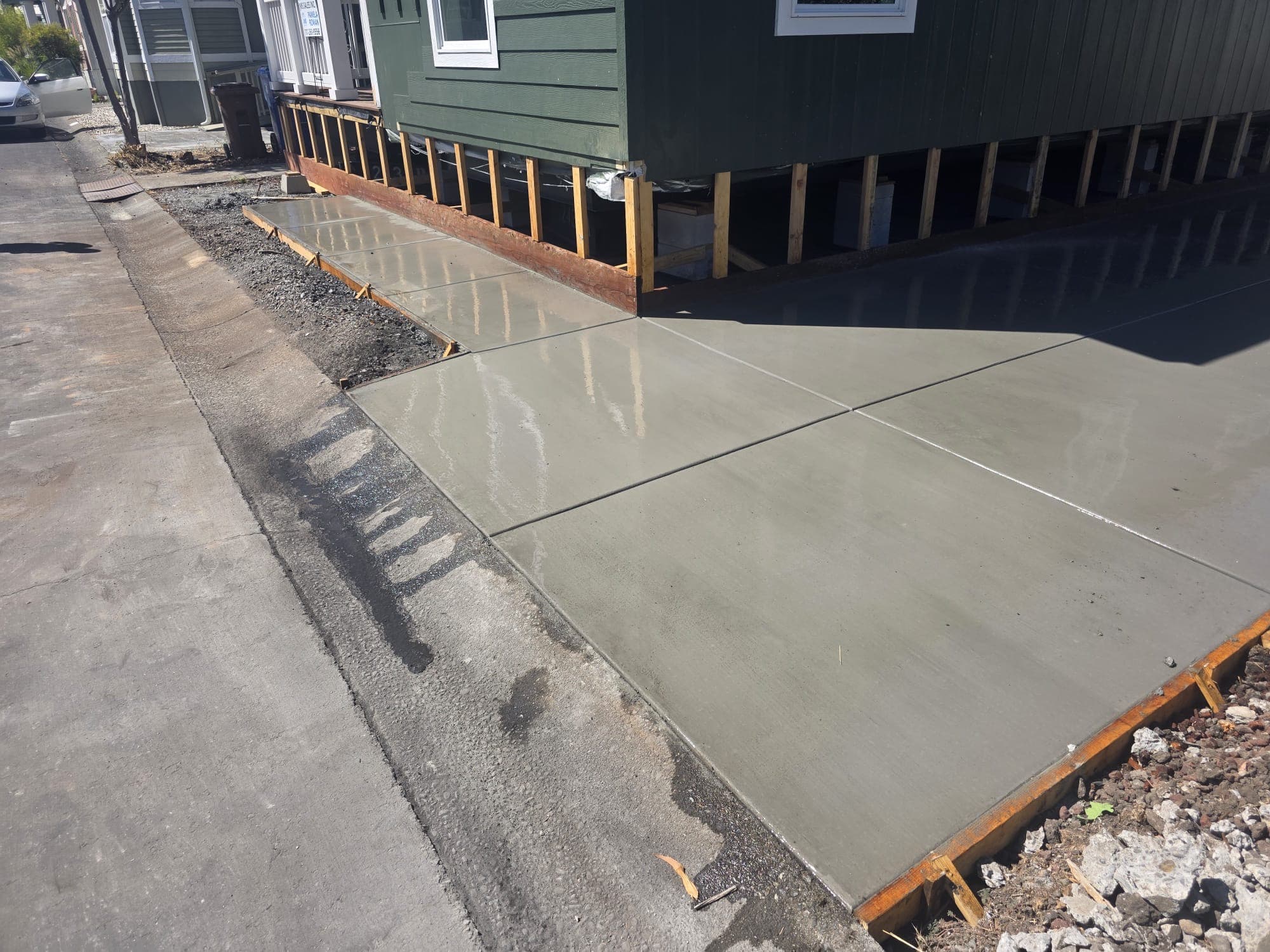
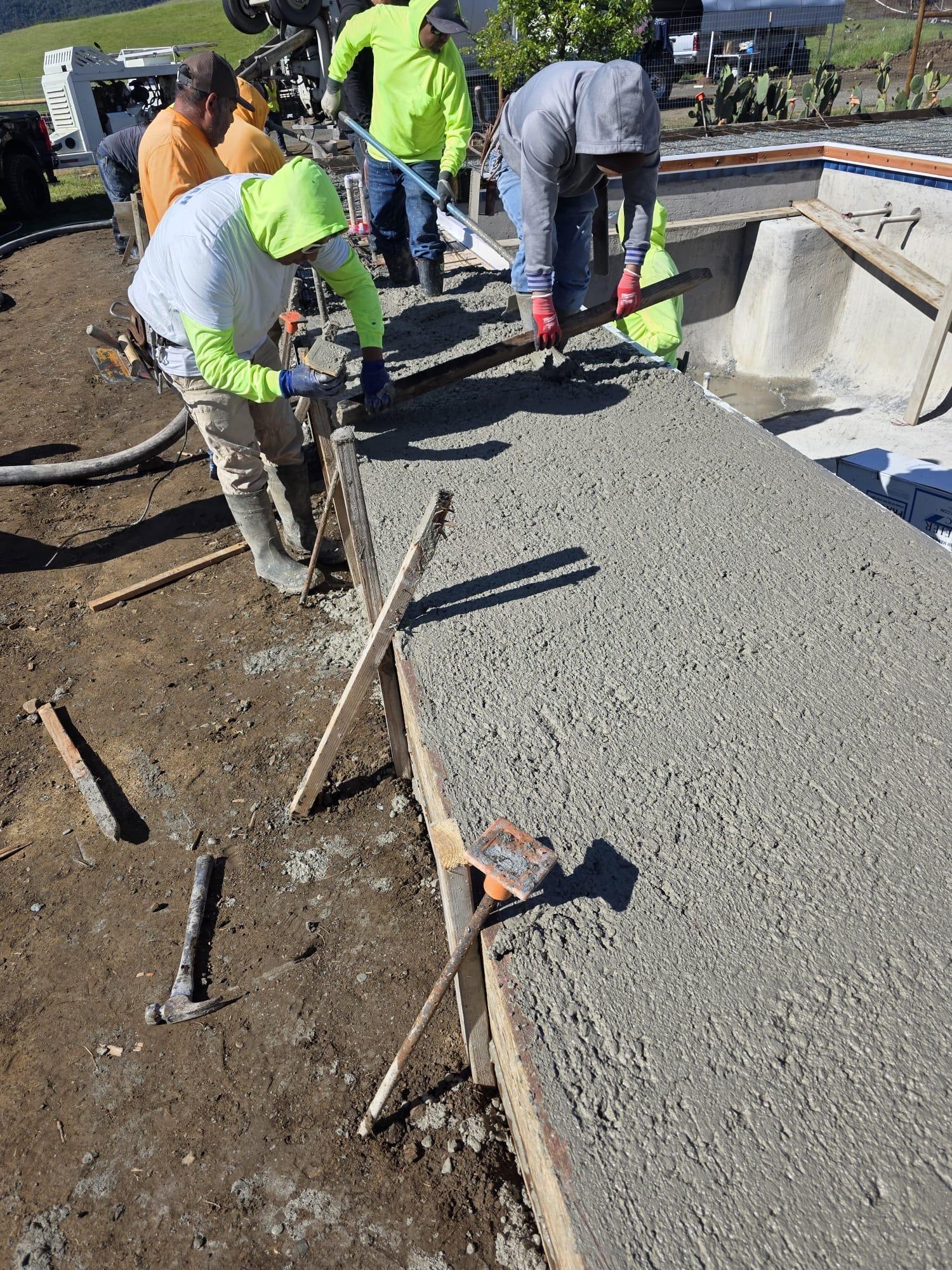
Where the water goes matters more than the shape
A walkway is the cheapest concrete on most properties and the easiest one to get wrong, because it usually sits closer to the house than anything else. Pour it dead flat, or slope it the wrong direction, and you have built a channel that delivers rain straight to your foundation.
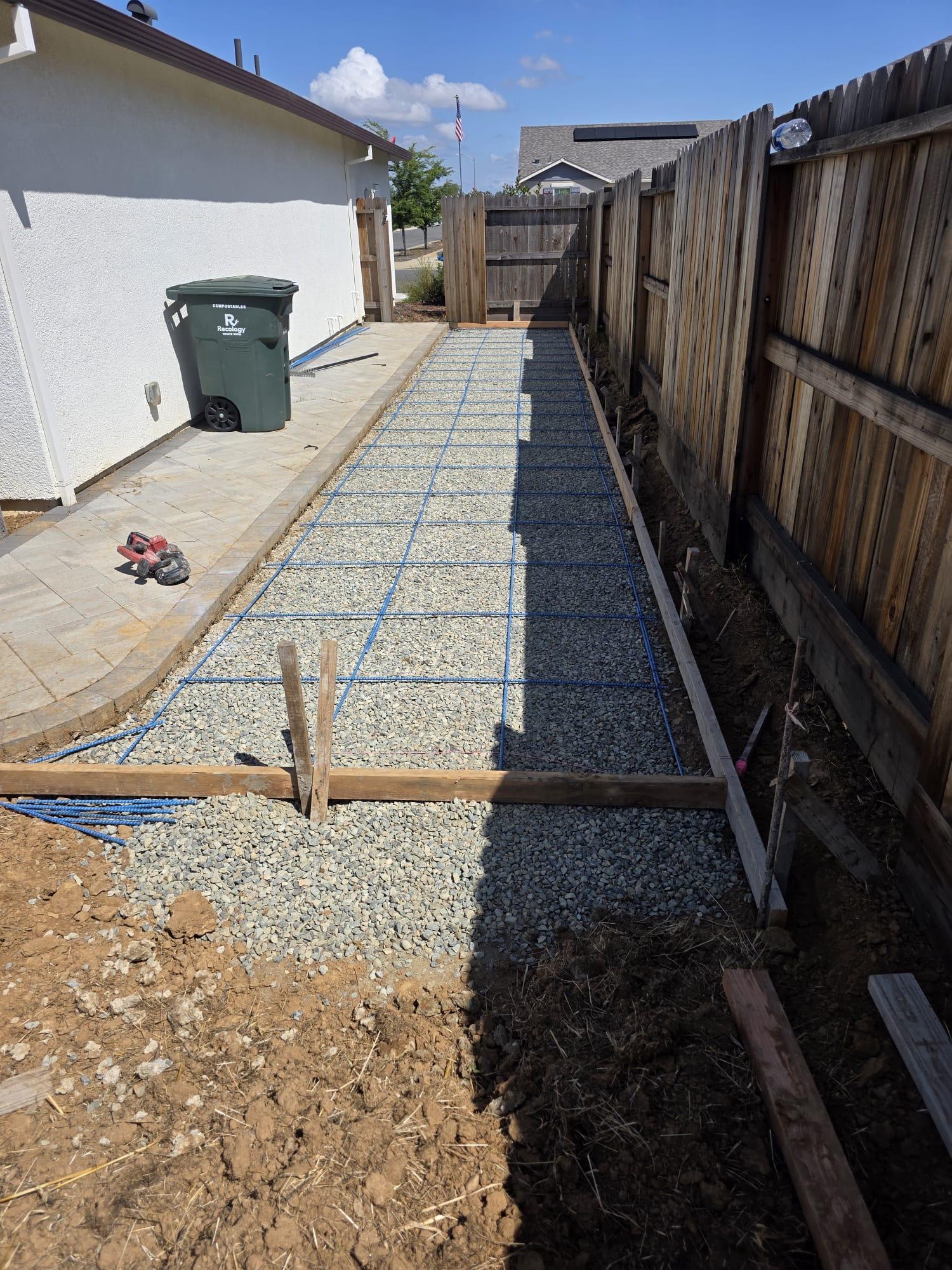
So we shoot the grade first and form to it. The finished path carries water away from the structure and off the walking surface, joints go in on regular spacing so it cracks where we put the line, edges get tooled, and the finish keeps enough texture to stay usable when it is wet.
Front entries, side-yard runs between the fence and the house, paths out to a shop or a garden, and public sidewalk sections. If your route ties into a city sidewalk or a driveway approach, we handle that transition.
Need a path poured?
+1 (530) 218-6221Call For Free EstimateCommon questions about walkways
How wide should a walkway be?
Three feet works for a side-yard run. A front entry that two people walk side by side wants four to five. Narrower than three starts to feel like a plank, and it is rarely worth the concrete you save.
Can a walkway match my patio?
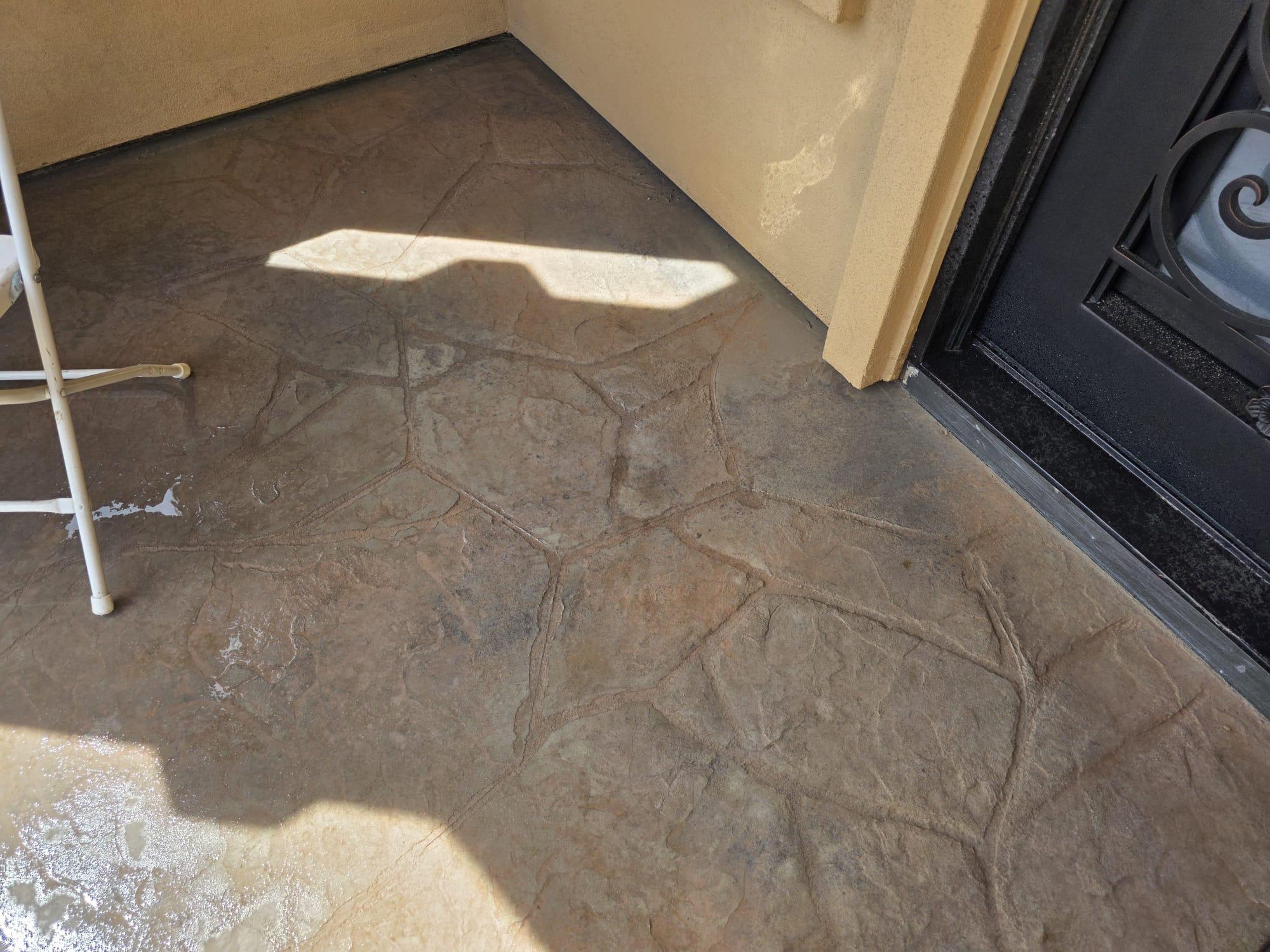
Yes. Same stamp pattern, same color, same finish, so they read as one surface, or a plain field with a stamped border so the walkway complements the patio instead of competing with it. Easiest and cheapest if we pour both at once.
Will tree roots crack it?
They can. If we are pouring near an established tree we will talk about routing around the root zone, putting a joint where roots are likely to travel, or thickening the slab. We would rather design around it than come back in three years.
Do you pour steps and landings too?
Yes, including the footings under them and handrail cores where the run needs a rail. Keeping risers consistent matters more than people expect. Uneven steps are a trip hazard, and on commercial work they are an inspection problem.